In September, we got an early look at the draft 2027 Australian Guideline for the Diagnosis and Management of Elevated Blood Pressure and Hypertension in Adults. The Guideline represents a much-needed evidence-based update to the previous 2016 Guidelines and aligns closely with international clinical guidelines.
Translating this evidence-rich, 132-paged guideline into routine care requires a simple, practical, and scalable tool: a Standardised Treatment Protocol. Generally presented as a one-pager as it appears on page 90 of the 2027 draft Guideline, Standardised Treatment Protocols provide a simple, stepwise approach to treatment initiation and intensification focused on three or four essential medicines at specific doses, with clear instructions on when to follow-up and what to do if blood pressure is not at target.
When implemented well, standardised treatment protocols can improve:
- Blood pressure outcomes
- Reduce unwanted variation in clinical decision making
- Improve procurement and supply chains
- Support team-based care by enabling non-physician healthcare providers to work alongside physicians.
Over 80 standardised treatment protocols are currently in use globally, and they constitute the clinical backbone of the HEARTS technical package, implemented in over 40 countries and reaching over 34 million people with hypertension.
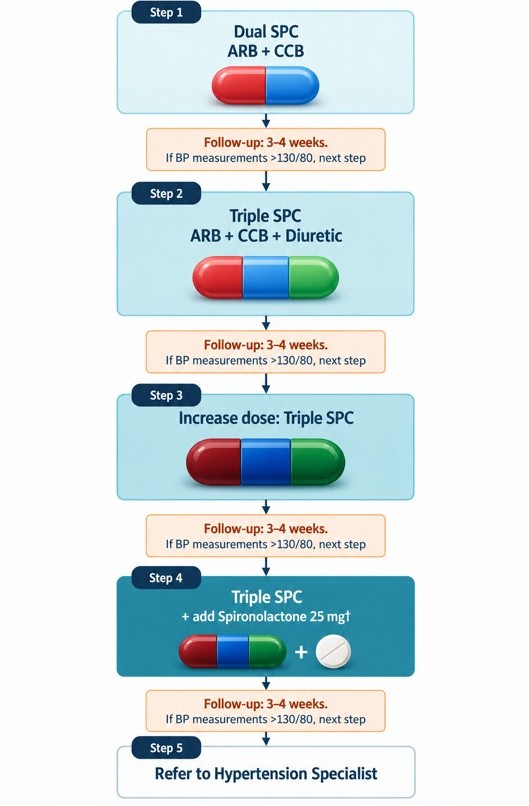
As AUS-HEARTS introduces HEARTS in rural and remote Australia, a crucial next step will be adapting the standardised treatment protocols recommended by the 2027 Guideline to the local workforce, access, and service delivery realities to support uptake.
A good standardised treatment protocol can potentially simplify care, but its impact will ultimately depend on whether people can reliably access medicines, particularly single-pill combinations, and receive timely follow-up when and where they need it.
Written by Gautam Satheesh